by David Glenn | Feb 23, 2017 | CRESTICO

The Smart Home is the trend of the future. Our world is becoming more computerized and interconnected, and many of the everyday devices that share our homes are beginning to take part in what’s become known as the Internet of Things. In the past several years, remarkable advances in technology have allowed microchips to be made smaller and more cheaply, and easily integrated into some of our most mundane household objects.
We’re growing more sensitive to the increasing cost of energy and the environmental impact of choices that we make as consumers, and the market is demanding higher-efficiency and lower-cost options for the many machines that work for us on a daily basis. Advancements in product design have helped maximize the usage of electricity, gas, and water in our home appliances, and computerization has allowed those advances to go even further. These new technologies are enabling our devices to optimize energy usage, and they’re also providing extra measures of comfort and convenience in our busy lives.
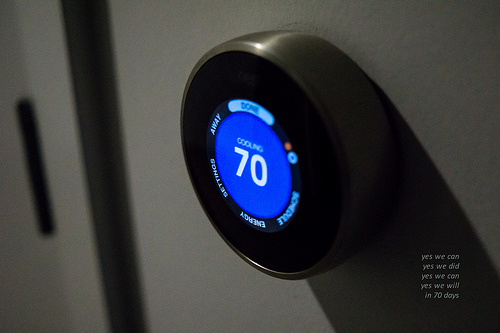
Climate Control
Smart thermostats allow you to remotely control your climate systems, such as heating, cooling, and humidity, as well as set schedules. Some systems can communicate with your phone’s GPS to detect when you’re on your way home and activate systems to ensure that you’ll be comfortable from the moment you walk in the door. Smart vents are able to work in conjunction with your HVAC systems to further optimize climate control, closing off airflow to rooms that are rarely used or controlling temperature room-by-room.
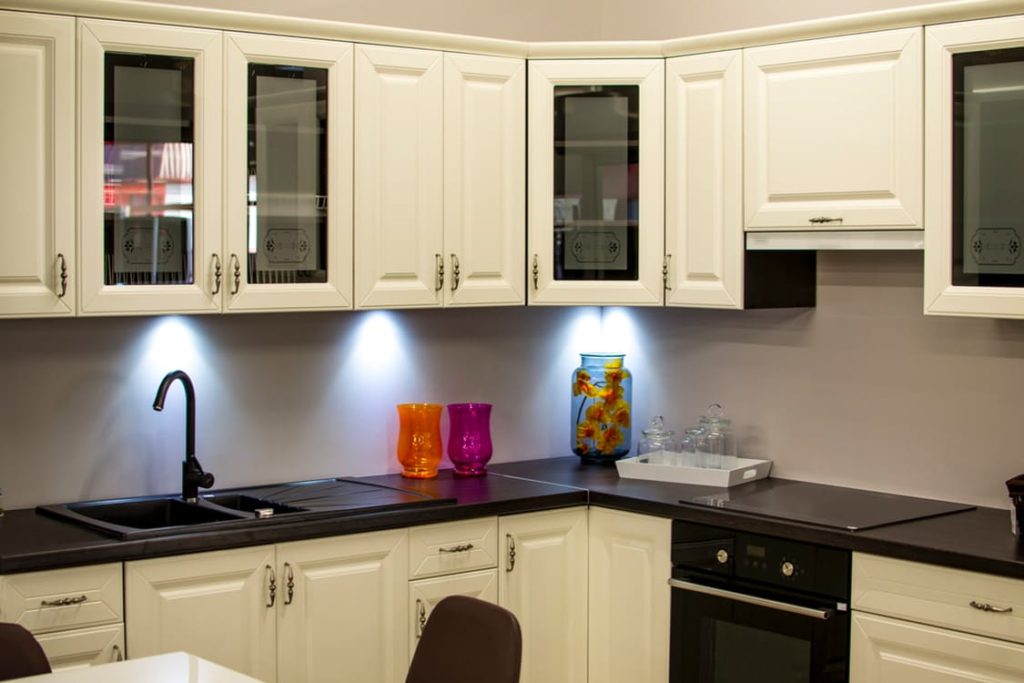
Intelligent Lighting
Like an advanced version of those old-fashioned dial timers we used to plug our lamps into, smart lighting controls allow users to set schedules to turn individual lights on or off at certain hours. Beyond that, new technology enables sensors to detect when you’ve entered or exited a room and adjust lights accordingly or fine-tune the spectrum of the lighting to perk you up in the morning and calm you down as bedtime approaches in the evening.
Security Systems
There is a multitude of wi-fi enabled security systems on the market which allow the user to remotely view security camera feeds and other sensors, some of which are even equipped with cellular connectivity to provide an extra measure of safety in case your wi-fi connection fails. Satellite internet providers that offer advanced end-to-end encryption, such as BusinessCom, can also provide an added measure of security.
Gone are the days when you may have headed to work in the morning to realize halfway through the day that you forgot to lock the door on your way out. Now, with a smart door lock, you can simply pull out your phone, tap the button, and your home is securely locked. Perhaps that scenario will never occur because as you walked out the front door and out of range of your home wi-fi network, your phone sent a signal back to the house and locked the door for you!
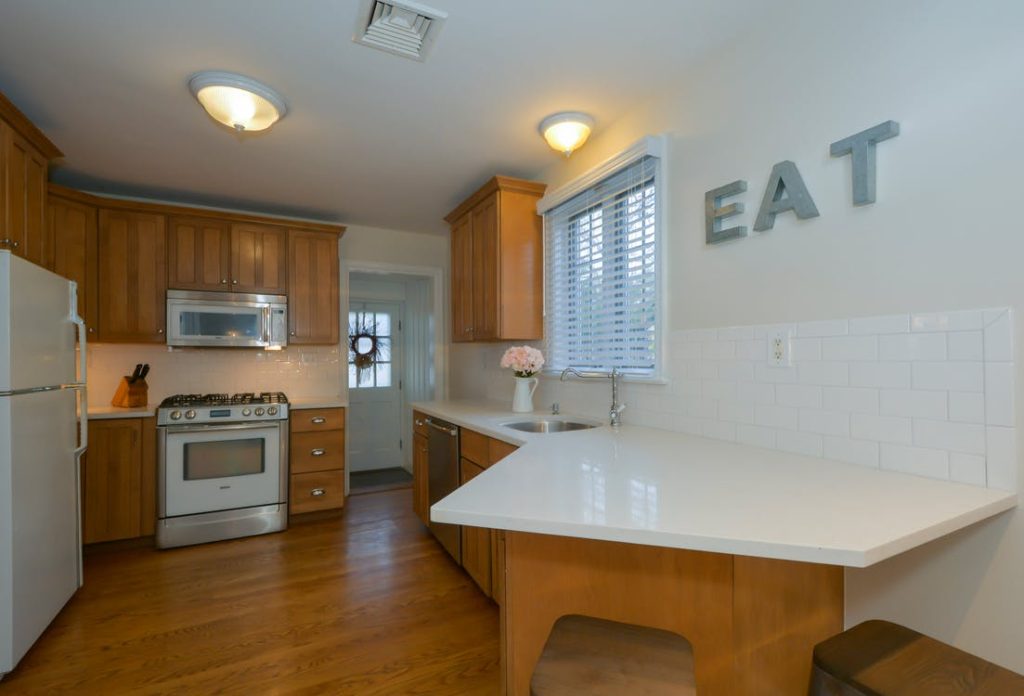
Kitchen and Convenience
You’re at the grocery store and can’t remember whether you needed milk. Just pull out your phone and open the fridge to check! Smart refrigerators equipped with wi-fi cameras and information panels are just a single example of the plethora of kitchen and home gadgets that can make your life easier. Coffee makers, ovens, deep fryers, juicers, and even trash cans can be connected to the Internet of Things!
We’re only at the beginning of the smart home revolution. Many of these devices are very reasonably priced, and as the trend goes, they will drop in price as time goes on. Even though we’ve seen amazing advances in Internet of Things technologies, they’re still in their infancy. Only time can tell what’s next!
by David Glenn | Sep 3, 2016 | CRESTICO

In Gil Kenan’s 2006 animated film, “Monster House,” three puberty-stricken teenagers discover that a local bungalow, owned by crotchety old man Nebbercracker, is possessed by the vengeful spirit of Nebbercracker’s one-time bride. The youth realize that Nebbercracker’s trademark warning, “Get off my lawn!” is a veiled caution to keep away from the clutches of his vindictive house.
How many homeowners can empathize with old man Nebbercracker? Not for his jealous housewife, of course, but for the trap of home ownership. Research compiled by Trent Hamm at The Simple Dollar indicate that the average American household spends a whopping $17,000 per year on home ownership. Census figures reported by Terry Mulligan in his article, The Average Cost of Running a Home, estimate that monthly home utility, fuels and public services cost about $300.
No one magical solution can shrink the costs of home ownership. Instead, rescue $5 here, $10 there. You can improve your home’s energy efficiency, and here’s how.
Shop In a Different Aisle
Want to work smart, not hard? Go shopping. Seriously. Saving money can be as easy as spending it – provided you abide by these rules:
- Purchase fluorescent or LED lights rather than traditional halogen or incandescent bulbs. According to research conducted by the U.S. Energy Information Administration (EIA), lighting accounts for 11 percent of the energy consumed by the average American home.
- Substitute low-flow 1.5 GPM shower heads for conventional waterfall shower heads.
- Choose ENERGY STAR-certified clothes washers, dryers, refrigerators, space heaters and window air conditioners. When using a window air conditioner, ensure that the unit is set to Recirculation mode.
- Install window drapes or blinds to prevent solar heat gain during warm months and radiant heat loss during the cool season.
Hire a Contractor
Technically, if you want the most efficient home possible, you ought to build it. Use low-e argon-filled triple-pane windows, blown cellulose wall insulation, on-demand hot water heaters, rooftop solar panels, natural gas-powered clothes dryers, 3-foot roof overhangs, mini-split reversible A/C systems and so forth. Good luck!
Here in the real world, efficiency must balance cost. Sealing a drafty back door with a can of DOW Great Stuff expanding foam takes just $5 and five minutes. Recommended retrofits, as showcased in the case studies of Allyson Went’s Building Green article, “The Challenge of Existing Homes: Retrofitting for Dramatic Energy Savings,” include double-pane low-e windows, heat-recovery ventilation systems, passive solar thermal collectors and 16-SEER central A/C units.
Automate Electronics and Energy Systems
Purchasing energy-efficient appliances is sage advice. But here’s a dirty secret: Americans are using less energy for appliances and more for personal electronics. The television and entertainment system consumes about 6 percent of a home’s energy, says the EIA. Business laptops, personal smartphones, gaming PC’s, video game consoles and children’s tablets devour even more.
The obvious solution is to downsize. But what red-blooded American could scream and throw popcorn at an NFL game displayed one a pathetic 16-inch screen? There’s a better way: home automation.
Once the realm of science fiction writers, “smart” technology is now mainstream. The new wave of smart devices, like the iDevices Switch, allows homeowners to automate the use and charging of their appliances. Idevices Switch is one of many smart plugs on the market, most of which can be controlled with a smartphone app or platform hub such as Apple HomeKit, Nest Weave or Samsung SmartThings. Plug a device into Switch, and you can control it with a phone. So schedule your coffee in the morning. Activate the kid’s night light. Turn off the TV after midnight. Nice to be God, isn’t it?
Innovative companies have even created smart HVAC systems. Nest and Honeywell offer smart programmable thermostats that, when paired with motion sensors, determine acceptable temperature ranges depending on the weather and home occupancy. The Ecovent retrofits existing ducted A/C systems with programmable opening and closing air vents for a zoned heating and cooling system.
So start shopping. Pick up a hammer. Get geeky. You can escape the fiscal burden of home ownership – and you’ll save some trees while you’re at it.
by David Glenn | Apr 20, 2016 | CRESTICO
Buying a home is not called the American dream for just any reason. It is a hard feat to accomplish and requires responsibility, hard work, and long term vision. It can also be scary for those buying their first home. There is a lot to know, and most have likely heard horror stories of friends homes that were hit by disasters, or who had issues dealing with insurance.
Fortunately home buying is not as scary as some people may think. There are plenty of professionals that you will work with along the way that will help make sure everything goes smoothly. Most people are surprised at the end of a first Home Purchase how simple the entire process was. There are costly mistakes that can be made, however, and should be avoided. Here are a few.
Choosing the wrong people
The people you work with while buying your first home are one of the most important decisions you can make. If you realtor is just in it for the money, they will push you to purchase a home as quickly as possible so that they can pocket the check and move on. Many realtors are trained to be this way. Conversely, if you can find a realtor that genuinely cares and has your best interest at heart, they will do digging, make sure there are no issues that could come up down the road with the home. These issues include things like improper paperwork with the city, hidden home damage, and overvalued home prices. A good realtor will do their homework and make sure your home is ready to live in safely for many years to come.
Budgeting

One of the biggest mistakes new homeowners make is understanding their budget. Most people that rent do not have to deal with repairs, maintenance, lawn work, taxes, insurance, or anything else relating to the home. As a new homeowner this is now completely your responsibility. If you are cutting your budget close while while buying the home you are likely forgetting the plethora of other expenses that may come up once the home is purchased. Make sure your income is enough to cover potential expenses and understand what those expenses could be. Additionally make sure that you have enough time to do things like yard work and maintenance, you will be surprised how much can be saved doing it yourself.
Research
Do the research! Find the perfect home. There is likely a home in your price range that you will love, but you need to spend the time to find it. Use resources like the Georgia MLS (or whichever state you live in) to find houses that may not be up yet on the web. Your realtor will have access to this.
DIY

Most first-time home buyers have zero clue how to fix anything in a home. Plumbing sounds gross, electricity sounds terrifying, and lawn maintenance sounds dull. Unless you are purchasing a brand new home however, you will likely run into some repairs and maintenance fairly soon. Your first reaction will be to call a handyman and let them deal with it.
This is probably the wrong first reaction. Most home repairs can be done with a YouTube video, a trip to home depot, and five minutes. You may be blown away by your ability to quickly understand how a toilet or sink work.
by CRESTICO | Feb 6, 2012 | CRESTICO
Today’s buyers are looking for turnkey homes. That is, they want to move right in without having to do a lot of work. Buyers with busy lifestyles pay a premium for listings that are in prime condition. Staging can make the difference between a listing selling or not, the time it takes to sell, and the ultimate sale price.
Sellers who are financially strapped often have a hard time accepting that they’ll need to invest in preparing a house for sale even though they may sell for less than they paid. Fix-up costs can mount up; your agent can help you prioritize so that you don’t waste money. It’s important to keep your goal in mind, which is to sell your house in a difficult market.
Recently, a home in an affluent city came on the market in “as is” condition. It had been lived in for decades without much upgrading. Although located in a desirable area, the listing was vacant, dark and showed poorly. The sellers refused to do any work to improve its appeal.
After months on the market with no significant interest, the sellers pulled the house off the market and made improvements. The wall-to-wall carpet was pulled up to reveal hardwood floors that were then refinished. Painters lightened the interior and a professional stager was hired to bring in furniture, artwork, house plants and accessories. The listing was put back on the market with a fresh look and sold right away.
HOUSE HUNTING TIP: Although listings staged by a good decorator show well and often sell quickly, you don’t need to spend a lot to put your home into shape for marketing. Most homeowners have too many personal possessions in their home from a sale standpoint. Decluttering is something most sellers need to do.
Consider hiring someone to help you sort, pack, donate and recycle items that you no longer want. You may be able to take a tax deduction for things you donate. Make sure to get a receipt. Your Real Estate agent should be able to recommend someone who can help you clear your house of clutter if you are overwhelmed by the project.
Your agent, or stager, may ask you to put away collections of art, personal photos, etc. This can be difficult for most sellers because, for them, it’s part of the emotional appeal of their home. Your house won’t look like your home after you’ve removed personal possessions and moved what’s left around to display the house to its best advantage.
That’s the point of the preparation process. You don’t want prospective buyers focusing in on your personal property; you want them to focus on the house. Keep in mind that how you live in your home and how it should look when it goes on the market are not the same.
Some sellers complain that their house looks too stark without all their possessions. Even so, it helps you to detach yourself emotionally from the property. Also, less personal property usually gives homes a more spacious feel. When buyers are looking for the most for their money, bigger is usually better.
To close the deal, a listing should be spotless and inviting. Bring in new house plants to put in strategic locations, like orchids in the bathrooms. In dark spots that need a dash of warmth and color, use bromeliads.
THE CLOSING: If you can’t pull this together yourself, or with the help or your agent, hire a good stager for a consultation or a proposal for full or partial staging.
By Dian Hymer
How to sell my house fast
by CRESTICO | Aug 1, 2011 | CRESTICO
Buying a home can be very exciting! It’s part of the "dream" we all have for ourselves, the marriage, the family, the pet, the white picket fence – all of these things are dependent on having a home. Having means owning, not renting; to those of us wishing to make the most of our hard-earned money. But making the most of your money is not always easy – it takes a little bit of savvy and a lot of consideration.
Consideration means research, research and some more research. You need to know the facts. Not just about the home you are buying, but also the city, community, history and future projections, to help you determine whether this investment is right for you. While buying a home is not permanent – it is long term and you need to make sure the home you select matches your long-term lifestyle choices.
Budgeting – this is key! You do not want to get yourself into a home you cannot comfortably afford, or you will end up working and never being home to enjoy it; or unfortunately even potentially risking losing it or other valuable items in your life.
•Get familiar with home buying terminology. Know the difference between the types of loans, insurance, Interest Rates and programs available to you.
•Figure out your budget. Work with your loan consultant to determine what you can actually afford to pay on a monthly basis. Remember, a mortgage payment is not just principal and interest, there are taxes and insurance that will need to be paid. Also, the community you select a home in may have a homeowner’s association that charges a monthly fee. These are all in addition to the increased utilities, maintenance and potentially security costs that go along with owning a home. Remember, there no "super" to call when that toilet gets clogged!
•Get rid of your old bills! You’ll have lots of new bills to replace those! Try to pay off all your existing credit card bills. The less debt you have, the better loan you will qualify for.
• Read your paper work. HUD has a handy booklet on its site called "Buying Your Home: Settlement Costs and Helpful Information." It describes the home buying and settlement process and explains most of the expenses you will encounter. Although your lender will give you a copy, it’s a good idea to read it before you even consider applying for a loan.
• Ask questions. Make sure your loan and Real Estate consultants are the kind of people who take the time to explain every single step of the process and answer each of your questions. They are there to serve YOU! Buying a home is a serious decision and the people helping you should appreciate the opportunity to serve you. The service you receive should be attentive, respectful and consistent!