by David Glenn | Nov 14, 2016 | CRESTICO
The fact that Interest Rates have dropped to near historic lows as the rents continue to sky rocket in most urban set ups, buying a home seems to tilt the balance to its favor. The reports by Trulia also suggest that for renting to become cheaper than buying, the 30-year fixed mortgage must hit at least 5% in Los Angeles and 5.1% in New York City. However, the mortgage rate has hit a low of 3.17%, making the projection unattainable, at least in the near future.
As much as the statistics favor home buying over renting, for many Americans, the financial tradeoff may not be easy. Numerous advantages come with home ownership, not to mention the tax deductibles on your mortgage interests. But if you don’t carefully analyze your financial situation and make informed choices, home ownership can turn into a financial nightmare.
The most critical component of your decision-making process should be your financial stability. You need to ask yourself key questions like: How stable is your job? How likely are can you get a pay raise or promotion over the coming years? Is your job likely to shift locations or cities? How stable is your marriage or relationship? Is there a possibility of splitting up or divorcing that may occasion untimely disposal of the home? And so on. If the answer to one or more of your questions indicates doubts on whether you will maintain the house within the next five years or more, then it would be pointless to commit yourself, regardless of the mathematics.
Change of Cities
If the nature of your job or appointment involves frequent relocation or change of cities, you may need to evaluate between buying and renting. Many home owners have suffered the cost of servicing mortgages for homes they do not live in. They even spend more resources in renting homes in their new location. Their efforts to sell may be thwarted when the timing coincides with the market lows when the mortgage interest rates rise, wiping out their equity and savings.
Financial Situation
Many Americans are living under strenuous financial situation and may not be in a position to save enough for the down payment. You need to analyze your individual financial status. The ultra-tight Real Estate markets like San Francisco even make it harder for aspiring home owners.
Home Insurance Costs
It is important to know that homeownership doesn’t stop with the acquisition of the mortgage. You’ll need money to settle your property taxes, and the mortgage company will require a proof of home insurance policy. When you rent a house, your landlord will cater for property insurance in addition to some utility bills like water, heating, or power. However, you may need to provide for your rental insurance, which is much more affordable. The policy still provides good benefits of homeowners’ insurance, except that it doesn’t cover the building structure.
Home Maintenance Costs
As a homeowner, you take responsibility for all your maintenance costs like fixing a leaking roof, the parading ants over your kitchen cabinets, broken toilet bowls, electrical breakdowns, and much more. And then there’s the dirty task of mowing your lawn, cleaning the compound, painting the walls, etc. When you decide to rent, most of these tasks will be done by the landlord or an appointed agent.
Bottom line
While it’s true that reduced rates are quite tempting to potential home buyers, you shouldn’t use the statistics to make costly purchases that could turn problematic. You can consider renting affordable housing alternatives like studio apartments as you put aside substantial savings for future investments. That way you’ll be able to make much larger down payment when the markets can’t offer better mortgage rates.
If you borrow less and give a huge down payment, the banks and the property sellers will prefer you over your competitors in a bidding situation. Additionally, your house will appreciate much faster in value as interest rates reduce, cutting down your financing costs.
by David Glenn | Oct 14, 2016 | CRESTICO
Finding the right home is hard, especially for individuals who have special needs. It’s not an impossible process, but it is best to keep a few tips in mind to make sure that it goes as smoothly as possible.
Know Your Needs
The most important part of the process is knowing exactly what sort of housing you need to accommodate your disability. The more information you can provide to the Real Estate agent, the more likely they are to find something appropriate. There are times when finding an appropriate home on the market will be impossible, so it can also be prudent to meet with contractors so you can determine which houses can be renovated to meet your needs. According to Disability.gov, most renovations for this purpose only cost between $150 and $2000 dollars, so you should remain open to the idea of altering an existing home.
Take Your Time, But Act
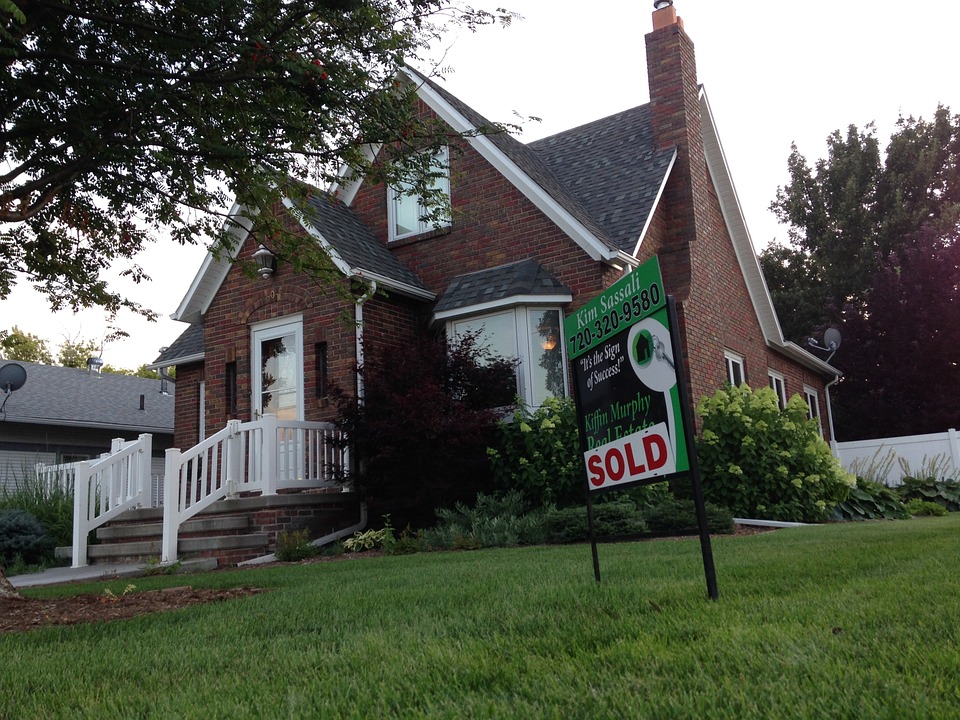
Finding a home can be a long and frustrating process, but it’s important not to rush things. Buying a home is a big decision, and it’s important not to forget any details that could make it hard to live with your disability in your new home.
On the other hand, it’s also important to act once you find something that does meet your needs. Nothing is more frustrating than finding your perfect home and losing it because somebody else bought it before you made up your mind. Take all the time that you need to make sure the home is appropriate, but be sure to act once you are positive that it is.
Look For Support
It may seem impossible to get your own home, but there’s plenty of support out there that can make the process easier. Many government programs, such as those offered by state governments and the federal Department of Housing and Development, offer financial support for disabled people who want to buy a home. Private groups, such as Habitat for Humanity, can also help build or fund a home. These groups usually work very closely with disabled individuals, so they know how to build a home that can meet any special requirements. Those organizations can take more than a year to go from applying to closing on a home, so it’s best to apply as soon as possible if you think they can help you.
Know Your Rights

Disabled individuals face a lot of challenges when it comes to finding a home that meets their needs, so they shouldn’t need to deal with discrimination for landlords or real estate agents. Fortunately, the Fair Housing Act offers protection against that type of discrimination. Discrimination is relatively common in spite of that protection, so it’s important to know your rights before you hunt for a home.
In this case, discrimination includes advertising a home in a way that indicates a preference for people who are not disabled, refusing to sell or rend to a disabled person, or interfering with their ability to exercise their housing rights. They are also forbidden from offering different terms to disabled individuals than they would to anybody else. Disabled individuals are also entitled to make reasonable modifications to their home to accommodate their disability.
In the event of a violation, individuals are entitled to file a complaint to the United States Department of Housing and Development, which will attempt to resolve it. The HUD will start by attempting to reconcile the two parties, but if that fails the matter will go to court. The court can order the landlord to pay compensation to the wronged party, so it’s important for people to know their rights and be willing to fight for them. If you aren’t sure if you have a case, consider consulting an injury lawyer or other legal expert who has experience dealing with cases that involve disabilities.
by David Glenn | Oct 12, 2016 | CRESTICO
The Real Estate market is constantly changing, and home prices are skyrocketing in many cities. Every year, there are new trends. Some people choose to purchase used homes, but most people prefer new homes. Depending on the location and the materials used, a new home can be very expensive. Fortunately, improvements in technology are paving the way for more affordable housing. In the real estate industry, 3D printers are changing the way homes are built in cities and suburbs.
More Affordable Real Estate
When it comes to real estate prices, the land is usually more expensive than the actual house. Population density, proximity to restaurants and retail stores, the local economy and the education system are all factors that affect property values. Homes in rural areas are usually more affordable than homes in urban areas. In recent years, 3D Construction has been introduced to the real estate industry. The automation process is making homes more affordable in suburban and urban communities.
The City and the Suburbs
Every year, millions of people decide to purchase a new home in the city or the suburbs. In the near future, many people will be able to afford homes in affluent neighborhoods. Mortgage payments will be more affordable. Suburban families will be able to afford larger homes, and urbanites will have more expendable income. Low-income people will have better housing options. Millions of young adults are having a difficult time reaching important milestones. When 3D printing becomes mainstream, young adults will be able to live in safe and affordable neighborhoods.
Desirable Neighborhoods and Luxurious Features
A decade ago, construction workers were having a difficult time building affordable homes in desirable neighborhoods. Currently, a 3D printer can build a luxurious home in a desirable neighborhood. The new technology will not eliminate construction workers. Construction workers have to oversee the project.
Boosting the Local Economy
In addition to making housing more affordable, the affluent population will have access to more luxurious features. High-quality construction materials and intricate designs will be more readily available. This technology will have a positive impact on the residential and commercial real estate industry. Commercial buildings will be more affordable and business owners will spend less money on overhead costs.
Quality Construction Materials
The new technology can build pre-assembled HVAC systems and pre-insulated walls. The materials are environmentally friendly. When 3D printers are standard construction industry tools, construction workers will be able to reduce the number of tedious delivery trips. Since many of the construction materials can be loaded into the printer, the materials can be shipped to the construction site. Construction workers can transport lighter loads. This will help construction workers increase their productivity and reduce fatigue. Shipping and handling systems can transport the 3D printer.
Less Wasteful
Currently, most printers can only print materials individually. In the future, the printers will be able to perform multiple functions. In the next few years, the technology may be able to print reinforced plastics with graphene materials. The printers can already build strong concrete walls. This construction method is also less wasteful. Until recently, excess materials were a necessary expense. When a printer handles the construction work, raw materials are not wasted. This construction method will increase the production speed, and it will reduce the construction costs by more than 30 percent.
The new 3D printing technology will benefit real estate professionals, homeowners and construction workers. For many people, owning a home will become an attainable goal. This technology will help create thousands of new jobs in the real estate industry.
by David Glenn | Sep 14, 2016 | CRESTICO
If the history of building has been consistent in one thing, it that features once considered a luxury eventually become standard. Once air conditioning was a privilege of the wealthy; today no one would buy a home without it.
Today’s technology is following the same history. Smart homes with intelligent lighting, thermostats, and alarm systems were once science fiction. Now this kind of technology is being built into many new homes, as more and more buyers expect and even demand it. And with the technology more advanced and more affordable than ever, they should expect this convenience for their money.
Smart Products
Billions of dollars are being spent to upgrade older and even new homes with smart products to retro-fit home automation systems. Homes become Wi-Fi networks with wireless audio, motion-activated lighting, surveillance cameras, and HVAC systems, and even internet-connected dishwashers and refrigerators. All of these devices can be controlled through ubiquitous smartphones, so it makes perfect sense to want them in our homes.
Home security companies and even cable communications providers have gotten onboard to offer automated solutions for security and smart entertainment systems. Google and Amazon have both invested heavily in producing their own home automation products. The smart home lifestyle is now being lauded on the internet and national TV commercials, so the interest is only going to grow. U.S. sales of automation systems are expected to surpass $16 billion by 2019.
Slow to Adapt
But these add-on products are not on the same level with a comprehensive, integrated system that can be built into homes. Providers of these smart home solutions have been developing and perfecting their product for years now. The question is why so few builders have partnered with them to provide automation in new Construction.
The reason seems to be that so many builders are still following the traditional mindset; they are resistant to change or dismissive of the profit and market potentials. They may feel they lack the expertise or logistics to get the technology integrated in homes without hampering long-established and well-organized building techniques.
But while the delivery of product and expertise to install it can be fulfilled by the smart home technology providers, a resistance to change is only going to hurt construction in the long run – that’s within the next decade, if not now.
Smart Business
Builders are wrong not to take advantage. As demand for integration of home automation rises, so does the price tag of homes with this feature. The opportunity for profit is growing. While the devices used are high-tech, actual installation is well within the skillset of a good electrician, even if a little training may be required, and easily becomes a part of the phase of running wires and installing fixtures.
Most new homes already incorporate elements of the last generation of technology, such as LED lighting, home security systems, and programmable thermostats. More comprehensive, integrated, networked smart homes will be the norm for the next generation. Builders who still doubt the practicality of including high-tech design in home construction are missing out on a lucrative market. It’s only a matter of finding a supplier with the right order fulfillment system and accepting a mutually beneficial arrangement. More technology means more business, not less.
The history of home construction tells us that while retro is often in, the latest conveniences always become mandatory. Once plumbing, electricity, and open floor plans were new. Home automation is the next step. It’s what people are asking for, and businesses are only hurting themselves by ignoring the demand.
When you realize that ignoring technology – and clients – is never the right move, it’s time to explore the world of home automation, and all that it has to offer. A well-built home that also has the latest technical innovations is going to sell faster and make customers happier. That’s always great for business.
by David Glenn | Sep 8, 2016 | CRESTICO
If the history of building has been consistent in one thing, it that features once considered a luxury eventually become standard. Once air conditioning was a privilege of the wealthy; today no one would buy a home without it.
Today’s technology is following the same history. Smart homes with intelligent lighting, thermostats, and alarm systems were once science fiction. Now this kind of technology is being built into many new homes, as more and more buyers expect and even demand it. And with the technology more advanced and more affordable than ever, they should expect this convenience for their money.
Smart Products
Billions of dollars are being spent to upgrade older and even new homes with smart products to retro-fit home automation systems. Homes become Wi-Fi networks with wireless audio, motion-activated lighting, surveillance cameras, and HVAC systems, and even internet-connected dishwashers and refrigerators. All of these devices can be controlled through ubiquitous smartphones, so it makes perfect sense to want them in our homes.
Home security companies and even cable communications providers have gotten onboard to offer automated solutions for security and smart entertainment systems. Google and Amazon have both invested heavily in producing their own home automation products. The smart home lifestyle is now being lauded on the internet and national TV commercials, so the interest is only going to grow. U.S. sales of automation systems are expected to surpass $16 billion by 2019.
Slow to Adapt
But these add-on products are not on the same level with a comprehensive, integrated system that can be built into homes. Providers of these smart home solutions have been developing and perfecting their product for years now. The question is why so few builders have partnered with them to provide automation in new Construction.
The reason seems to be that so many builders are still following the traditional mindset; they are resistant to change or dismissive of the profit and market potentials. They may feel they lack the expertise or logistics to get the technology integrated in homes without hampering long-established and well-organized building techniques.
But while the delivery of product and expertise to install it can be fulfilled by the smart home technology providers, a resistance to change is only going to hurt construction in the long run – that’s within the next decade, if not now.
Smart Business
Builders are wrong not to take advantage. As demand for integration of home automation rises, so does the price tag of homes with this feature. The opportunity for profit is growing. While the devices used are high-tech, actual installation is well within the skill set of a good electrician, even if a little training may be required, and easily becomes a part of the phase of running wires and installing fixtures.
Most new homes already incorporate elements of the last generation of technology, such as LED lighting, home security systems, and programmable thermostats. More comprehensive, integrated, networked smart homes will be the norm for the next generation. Builders who still doubt the practicality of including high-tech design in home construction are missing out on a lucrative market. It’s only a matter of finding a supplier with the right order fulfillment system and accepting a mutually beneficial arrangement. More technology means more business, not less.
The history of home construction tells us that while retro is often in, the latest conveniences always become mandatory. Once plumbing, electricity, and open floor plans were new. Home automation is the next step. It’s what people are asking for, and businesses are only hurting themselves by ignoring the demand.
When you realize that ignoring technology – and clients – is never the right move, it’s time to explore the world of home automation, and all that it has to offer. A well-built home that also has the latest technical innovations is going to sell faster and make customers happier. That’s always great for business.