by David Glenn | Apr 22, 2016 | CRESTICO
Photo via Wikicommons
New bathroom designs focus on pairing the function you expect with classy features and materials that add spa-like luxury. Don’t limit your design dreams to the standard porcelain and grout of yesteryear. If your current bathroom design leaves you bored or you are designing a brand new bathroom, keep the following tips in mind.
Use Glass for the Shower
Shower design is one of the most important elements affecting both style and function of a bathroom. Using glass for this feature has a number of benefits, and you should consider glass panels instead of just a glass shower door. A shower glass panel that covers at least one full side allows more light in and looks classy.
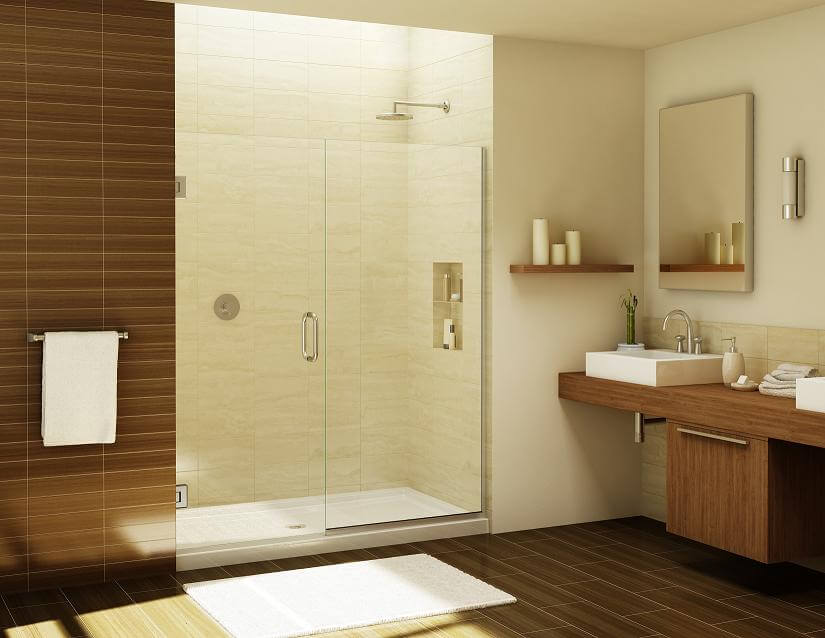
Photo via Wikicommons
Using a shower glass panel on both open sides of a corner shower not only adds a sense of luxury but, if it is clear glass, also makes the room feel bigger. Heavy, opaque shower surrounds create a visual stop in the line of sight, which makes the shower appear to take up more space and makes the room feel smaller.
Glass is also easier to keep clean than you might think. You can buy water repellant sprays that help keep water deposits and soap scum to a minimum. Some people swear by using a squeegee on the glass after showering to keep it spotless and sparkling.
Consider Glass Wall Tile
While we are on the subject of glass, consider using it for other bathroom elements, including tile. Glass features make the space feel crisper, cleaner and can make you feel you are visiting your own personal spa.
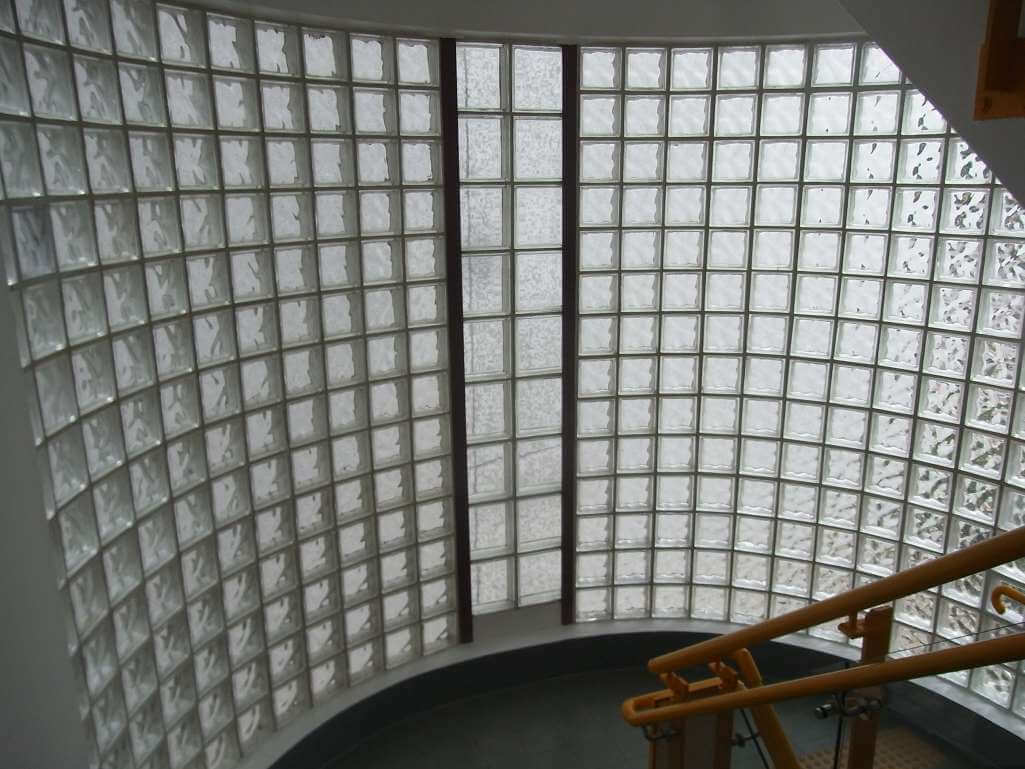
Photo Via Wikicommons
Glass tile has gained popularity in the past few years, and there are good reasons for its expanded use for backsplashes, shower surrounds and even the main bathroom walls. It is easy to clean, resists staining and mildew — which can plague some types of ceramic tile — and reflects light, which gives it a beautiful glistening appearance that many find attractive. In addition, glass tile’s natural translucence gives the tile color extra depth and mystery.
Even if you don’t want to use glass tile over a large surface, consider adding a mosaic using the beautiful tile, which will add a stunning custom touch to your new bathroom.
There are a lot of people that add an additional shine to their glass by using some form of organic coconut oil after cleaning.
Don’t Limit Your Lighting
A common mistake made in bathroom remodeling is leaving lighting as an afterthought. The best bathroom designs don’t limit lighting to a single fixture overhead or a few sconces. Whether your bathroom is large or small, the right lighting will enhance its features in addition to making the room more functional for your morning beauty and hygiene prep.
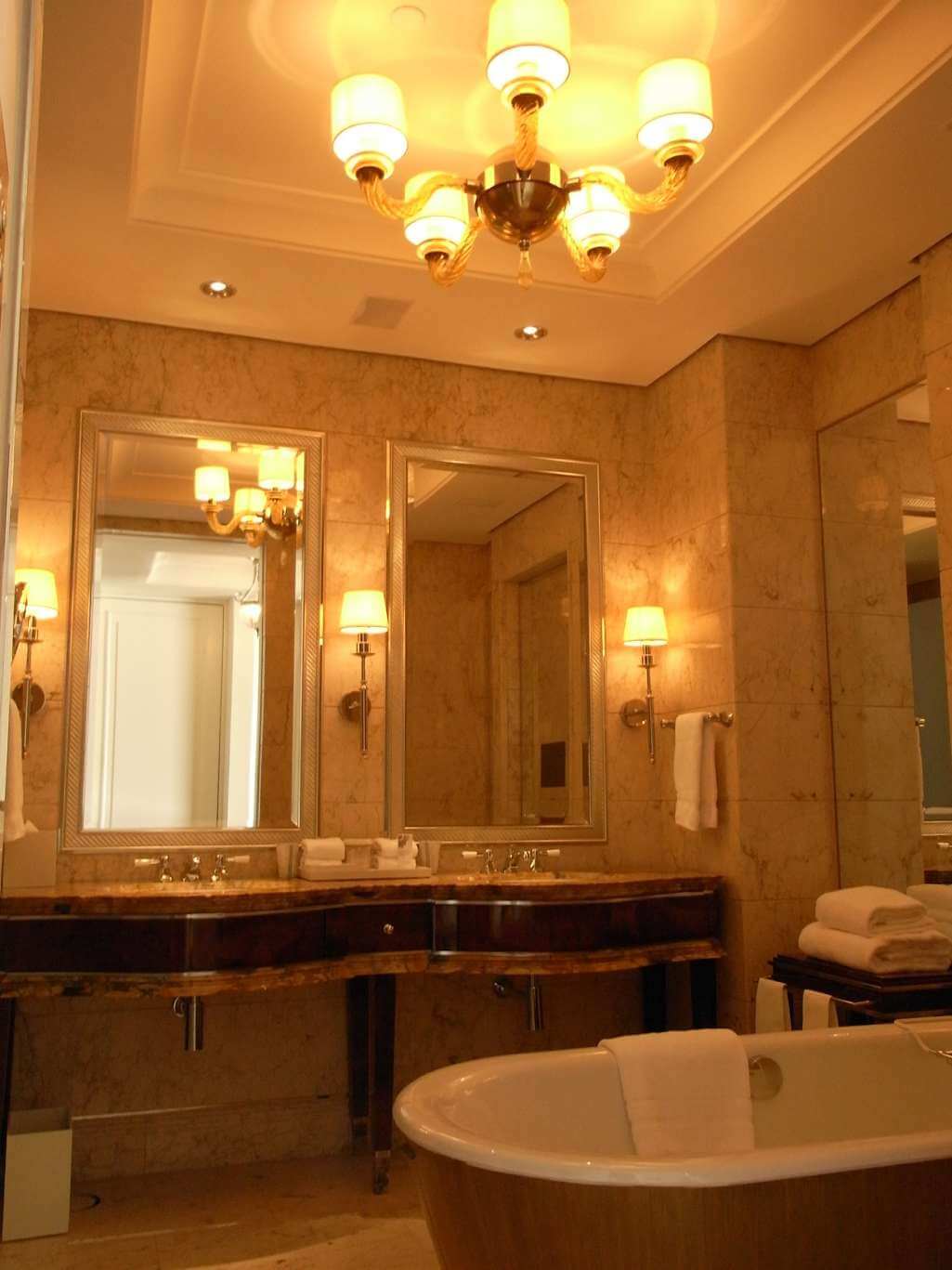
Photo via Wikicommons
Whenever possible, make use of natural lighting through skylights or big windows. Natural light enhances mood and just looks better than artificial light.
Whether your bathroom gets natural light or not, you will need to add overhead lighting as well as task lighting and accent lighting. Task lighting illuminates functional areas such as the vanity, and accent lighting draws attention to art or other decorative features you want noticed.
Wall sconces flanking the vanity mirror usually make the best task lighting for this area. If your bathroom contains a bathtub, an elegant overhead fixture above the tub can function as both task and accent lighting.
Remember that what you want to avoid is leaving areas of the room in shadow. Consider what the room’s lighting needs will be at various times of the day or evening, and plan accordingly. It is helpful, and sometimes necessary, to assign separate switches to each light source so that you have more flexibility to match the room’s lighting needs at any given time.
These three design tips complement any color palette you have chosen in addition to most design styles. Light fixtures come in many styles and colors, and it is easy to find glass tile in about any color you can imagine. Glass showers are unobtrusive enough to allow other decor features to take center stage if you wish, and so if you are looking for luxury, function and versatility, give these some devoted attention.
by David Glenn | Apr 21, 2016 | CRESTICO
Home trends change from year to year, but overall, home ownership is a beautiful thing. You have a place to call your own while building up equity in your investment. And there’s also something about owning your home yourself rather than renting it from someone else. Investing in your home most likely will bring a great return, so the following are a few tips from the pros as you look at what your home needs next.
- Getting back to nature
The down-to-earth vibe is here to stay for a while. Designers and homeowners are loving the clean, Nordic design look cozied up with natural pine flooring and furnishings, soft textures like shearling, hides and fur with the occasional pop of color. Dark shades of green (as in, deep jungle, forest and olive tones) and nuances of ocean hues (blue-green, lime, jade, and cobalt)are on the horizon as some of the top color trends for the coming year. Of course, strategically placed indoor plants (trend alert: olive plants and trees!) lend a touch of green to enliven a space.
- Dedicated, technology-free space in floor plans
As open concept design and technology evolve, homeowners are increasingly looking for a small place to escape to where technology is absent. A bedroom nook, library or entry alcove along with warm, enveloping furnishings provides the perfect retreat from the barrage of screen information most homeowners face daily. Early in the design process is the best time to nail down exactly where and how to carve out a peaceful sanctuary within your home.
- Natural Textures
For furniture design, cane, rattan and abaca have been reinvented with a modern flair. Cork, a fast-growing and renewable resource, is emerging as a strong sound buffer for the pervasive open floor plan. Think a side or coffee table, stool or even an entire wall in a home office. Cork’s warmth and renewability make it a top choice for 2017 homeowners. Terra cotta tiles are also on the upswing with a new matte finish that stays away from the rustic feel of previous years. Look for terra cotta to influence fireplace surround design and bathroom design.
- Art-inspired wallpaper
After years of removing wallpaper, homeowners and designers are now considering its many benefits. In addition to many up-and-coming designs in today’s marketplace, artists can now turn their work into wallpaper murals by enlarging their art to a grand scale. Area Environments is one such studio that has seen a rise in demand for art-inspired wallpaper and creates impressive wallscapes.
- Black as a staple kitchen design element
White as a preferred design element is slowly being upstaged by its direct opposite. Black cabinets, countertops, appliances and more are coming into their own as designers seek a warmer, sleeker silhouette. As the perfect foil for metals, plants and colorful food, black seems to be coming into its own. If homeowners aren’t sure about a full-on black kitchen, dark gray and strategically designed black and white layouts are growing in popularity worldwide.
- Fair realtor fees
Too often realtors are given their set fees automatically without any direct correlation to the quality of service they have provided. With housing prices possibly leveling off in late 2017, homeowners who are considering selling need to get top dollar without costly realtor fees. A popular option is a flat fee MLS listing service. Basically, this is a Real Estate broker offering to list the property for a flat fee rather than a percentage of the sale price. There are some additional details to consider before deciding if this option is the right one for you, but typically a successful property sale in this scenario results in a seller saving half of the traditional commission and retaining the right to sell on his or her own.
Your home is typically one of your biggest investment over your lifetime. Make it a great space to retreat to, play in and even sell when the time is right.
by David Glenn | Apr 20, 2016 | CRESTICO
Buying a home is not called the American dream for just any reason. It is a hard feat to accomplish and requires responsibility, hard work, and long term vision. It can also be scary for those buying their first home. There is a lot to know, and most have likely heard horror stories of friends homes that were hit by disasters, or who had issues dealing with insurance.
Fortunately home buying is not as scary as some people may think. There are plenty of professionals that you will work with along the way that will help make sure everything goes smoothly. Most people are surprised at the end of a first Home Purchase how simple the entire process was. There are costly mistakes that can be made, however, and should be avoided. Here are a few.
Choosing the wrong people
The people you work with while buying your first home are one of the most important decisions you can make. If you realtor is just in it for the money, they will push you to purchase a home as quickly as possible so that they can pocket the check and move on. Many realtors are trained to be this way. Conversely, if you can find a realtor that genuinely cares and has your best interest at heart, they will do digging, make sure there are no issues that could come up down the road with the home. These issues include things like improper paperwork with the city, hidden home damage, and overvalued home prices. A good realtor will do their homework and make sure your home is ready to live in safely for many years to come.
Budgeting

One of the biggest mistakes new homeowners make is understanding their budget. Most people that rent do not have to deal with repairs, maintenance, lawn work, taxes, insurance, or anything else relating to the home. As a new homeowner this is now completely your responsibility. If you are cutting your budget close while while buying the home you are likely forgetting the plethora of other expenses that may come up once the home is purchased. Make sure your income is enough to cover potential expenses and understand what those expenses could be. Additionally make sure that you have enough time to do things like yard work and maintenance, you will be surprised how much can be saved doing it yourself.
Research
Do the research! Find the perfect home. There is likely a home in your price range that you will love, but you need to spend the time to find it. Use resources like the Georgia MLS (or whichever state you live in) to find houses that may not be up yet on the web. Your realtor will have access to this.
DIY

Most first-time home buyers have zero clue how to fix anything in a home. Plumbing sounds gross, electricity sounds terrifying, and lawn maintenance sounds dull. Unless you are purchasing a brand new home however, you will likely run into some repairs and maintenance fairly soon. Your first reaction will be to call a handyman and let them deal with it.
This is probably the wrong first reaction. Most home repairs can be done with a YouTube video, a trip to home depot, and five minutes. You may be blown away by your ability to quickly understand how a toilet or sink work.
by David Glenn | Apr 16, 2016 | CRESTICO
Real Estate is one business that has stayed somewhat steady in the extremely fast-paced and constantly changing world of the 21st century. That doesn’t mean that real estate doesn’t change and doesn’t have trends that work their way into the mainstream, however. It is always important to understand trends as an investor. One of the most important factors in a good investor is their ability to identify trends before everyone else and capitalize on those trends. So what will be trending in 2017? How about 2025? Here are a few things that could make the list.
Home automation
Home automation is something that some believe is currently trendy, but most would argue that it hasn’t hit the mainstream yet. Many homeowners own a smart TV, or Kinect, or perhaps an alarm system, but most couldn’t say that their home has been fully automated. Neither is there a single company, or even a few, that are owning the industry.
That will likely change in coming years. As home automation technology becomes more mainstream people will begin to develop habits that make the think they cannot live without certain home automation aspects. These will in turn spur further pushes by companies into the home automation sphere, and someday soon many people will be living in a world they once only saw on TV, where you can speak to your home and it is ALWAYS listening.
Electricity
The electric industry has remained fairly constant for as long as most people can remember. Just look at the power lines out your window and you will easily be able to see how long it has been since any updates have been made. All of that is changing with emerging technologies.
The solar industry is set to be the biggest disruptor. Multiple solar companies have gone public in the last few years and are using the funds to rapidly expand into emerging markets. Vivint Solar, a Utah based company that went public two years ago has reported more than 100% sales growth multiple quarters since the offering. They have found a wiling market that is hungry for cheap, renewable, safe electricity.
This in turn has powered companies like Tesla to release batteries that are capable of storing enough electricity to power an entire home. Combing solar technology with battery technology will allow homes of the future to go completely off the grid, with no need to rely on electric companies for their basic needs. This means no more power outages, no more downed power lines, and cheaper electric bills.
Already many properties are seeing watt-hour meter’s get installed that allow for landlords to measure exact electric usage and charge based on the amount they use. This will also be utilized more as the industry grows, allowing (or forcing) people to only pay for the electricity they use, while also giving people a better idea of how much electricity their family uses each month.
Small homes
A strange new trend that many analysts probably never thought would come is the less-is-more philosophy. Many analysts are seeing trends that point to significantly smaller homes being built. Home s are being built to match currently family needs, and space is being utilized in a much more efficient manner. Many homes that are being built are significantly smaller than homes nearby, yet seem bigger with space utilization techniques and good storage.
These are just a few trends. All can benefit a savvy investor who knows what to look for and can spot a deal. Remember, do your research and good things will almost always follow!
by David Glenn | Apr 14, 2016 | CRESTICO
To invest or not to invest in Real Estate? – While Shakespeare didn’t really coin such a popular line, he may have done so if he lived in the modern day and age where real estate has become such a perplexing space to break into, investment-wise. For the novice at heart, here’s a few reasons why it’s a worthwhile market to add to your portfolio and how you can succeed in your venture. Bear in mind that these reasons are purely objective and are unbiased towards the real estate market.
Higher Leverage
Property is one of the few financial assets that can easily be leveraged through a loan. The ability to make a small initial payment, leverage your investments, and as a result amplify your overall ROI is quite impressive. With all else being equal, property investors are able to borrow more when using real estate as collateral relative to using a stock portfolio. In fact, banks and private institutions will lend up to 30 percent more of the value of a property portfolio than they will the value of a stock portfolio.
Simpler to Research
Unlike stocks and currencies that have all sorts of fundamental drivers and data points you need to keep updated, investment property involves only a few key factors for buying and selling your holdings. Stocks, on the other hand, involve a steep learning curve before one can methodically and consistently extract profits. Depending on the property niche you are looking to partake in as well as future investment goals you have in mind, the research data you will be collecting and analyzing may vary. Luckily, real estate software is nowadays very high-tech and covers all the fundamental and specific steps crucial for investing.
Diversified Portfolio
Investing in real estate effectively distributes capital risk. Properties have had historically low if not negative correlation with other financial assets. This means times of volatility can still produce higher ROI relative to the risk involved. Balancing your portfolio with properties and stocks can be difficult, albeit. Make sure to plan ahead and look for property investments that can hedge against future stock volatility.
High ROI
One of the most attractive characteristics of real estate investment is its stable income return. Over a three-decade period which began in 1977, nearly 80 percent of overall US real estate returns were rental income-based. Income-based assets are actually less volatile as an investment compared to assets whose returns are based on capital valuations.
High Safety Rating
Housing is a relatively safe investment hence the age-old phrase “safe as houses”. According to http://www.yourinvestmentpropertymag.com.au/, the rate of increase in property valuation was comparable to that of the stock market since the late 1920s, approximately 11.4 percent per year. What makes this even more remarkable is that the consistent boost in valuation occurred during a series of economic disasters including wartime and recessions.
Attractive Tax Benefits
Rental units provide investors with a great opportunity to write off personal expenses to valid business deductibles. Keep in mind that rental properties are a form of business, which means expenses incurred in visiting and maintaining the units can be legally deducted from your annual taxes. This increases not only the tax benefits for your cash flow but also for the future resale value of the property.
Huge Retirement Nest Egg
Rental properties act somewhat as a forced retirement plan. People are naturally horrible financial planners and, even worse, money savers. People lack the willpower and self-discipline to deposit money into their IRAs and 401Ks. As a result, the tax benefits and the compounding effect tend to be weaker than the potential growth from maximum monthly deposits. A rental property is a big-ticket item, which ultimately forces you to be wiser, more disciplined, and more committed towards your portfolio.
Summary
There are many other advantages to picking up property as an investment. Aside from the ones aforementioned, you also have the fact that demand for rental units owned and managed by private landlords is increasing. Investing today also strategically positions you to acquire homes that were recently foreclosed and are therefore substantially cheaper. To get started with your real estate investment, start drafting a short-term and long-term plan. Attend open houses and talk with brokers who can help show properties that are up for grabs.