Purchase or Refinance

Offering Purchase or Refinance by Los Angeles Mortgage Broker Direct Lender lowest rates and closing cost for First Time Home Buyers or Seasoned Investors.

For more information please visit www.crestico.com or call (818) 784-2929

FHFA Announces Conforming Loan Limits for 2021

The Federal Housing Finance Agency announced a new baseline conforming loan limit for Fannie Mae and Freddie Mac in 2021: $548,250.

The Federal Housing Finance Agency (FHFA) today announced the maximum conforming loan limits for mortgages to be acquired by Fannie Mae and Freddie Mac in 2021.  In most of the U.S., the 2021 maximum conforming loan limit (CLL) for one-unit properties will be $548,250, an increase from $510,400 in 2020. 

  • $548,250 for 1-unit properties
  • $702,000 for 2-unit properties
  • $848,500 for 3-unit properties
  • $1,054,500 for 4-unit properties

Baseline limit
The Housing and Economic Recovery Act (HERA) requires that the baseline CLL be adjusted each year for Fannie Mae and Freddie Mac to reflect the change in the average U.S. home price.  Earlier today, FHFA published its third quarter 2020 FHFA House Price Index® (FHFA HPI®) report, which includes estimates for the increase in the average U.S. home value over the last four quarters.  According to the seasonally adjusted, expanded-data FHFA HPI, house prices increased 7.42 percent, on average, between the third quarters of 2019 and 2020.  Therefore, the baseline maximum CLL it in 2021 will increase by the same percentage. 

High-cost area limits
For areas in which 115 percent of the local median home value exceeds the baseline CLL, the maximum loan limit will be higher than the baseline loan limit.  HERA establishes the maximum loan limit in those areas as a multiple of the area median home value, while setting a “ceiling” on that limit of 150 percent of the baseline loan limit.  Median home values generally increased in high-cost areas in 2020, driving up the maximum loan limits in many areas.  The new ceiling loan limit for one-unit properties in most high-cost areas will be $822,375 — or 150 percent of $548,250. 

  • $822,375.00 for 1-unit properties
  • $1,053,000.00 for 2-unit properties
  • $1,272,750.00 for 3-unit properties
  • $1,581,750.00 for 4-unit properties

Special statutory provisions establish different loan limit calculations for Alaska, Hawaii, Guam, and the U.S. Virgin Islands.  In these areas, the baseline loan limit will be $822,375 for one-unit properties.

As a result of generally rising home values, the increase in the baseline loan limit, and the increase in the ceiling loan limit, the maximum CLL will be higher in 2021 in all but 18 counties or county equivalents in the U.S.   

Questions about the 2021 CLLs can be addressed to LoanLimitQuestions@fhfa.gov and more information is available at https://www.fhfa.gov/CLLs.

Source: https://www.fhfa.gov/Media/PublicAffairs/Pages/FHFA-Announces-Conforming-Loan-Limits-for-2021.aspx 

Housing assistance grants for homeowners and renters affected by the Camp, Woolsey, and Hill fires

Through a $1 million gift from the REALTORS® Relief Foundation, C.A.R. is offering disaster relief grants up to $2,000 per household to provide housing assistance with mortgage relief or temporary housing, such as payments on the mortgage of a primary residence that was burned in a fire, lease or rent payments on replacement housing, or payments to a temporary shelter.

Grant details:

  • Relief assistance is limited to a maximum of $2,000 per applicant household. The deadline for application submission is June 30, 2019, contingent on the availability of funds.
  • Assistance is for housing relief only; other expenses including mortgages on property other than a primary residence, vehicle purchase, rental, repair and or mileage are ineligible for reimbursement under this program.
  • Documentation requirements: proof of residency, proof of lease/ownership, proof of damage/loss.
  • One application per household.
  • Grants are available only for the applicant’s primary residence.
  • Recipients of other financial assistance (FEMA, charitable groups) are eligible.

If you are in the Los Angeles area, have any questions or Real Estate sales or financing needs, feel free to contact us www.crestico.com/contact

Best Christmas Lights and Awesomely Decorated Homes Around Los Angeles

Whether your holiday of choice is Christmas, Hanukkah, or Kwanzaa there is a timeless joy to be found in taking a spin around the holiday light displays. There is a particular magic to those over-the-top holiday light displays created by someone’s next-door neighbor. Even better is a whole street made up of nothing but this kind of neighbor. LA County has plenty of these community treasures hidden in plain view; some of the top Christmas crowd-pleasers are listed.

Sleepy Hollow Christmas Lights –  Robert Road, Torrance 90505
Also known to locals as “The Hole,” Torrance’s Sleepy Hollow neighborhood has been sending up flares for Santa for more than 40 years. Fans pour through nightly from Thanksgiving weekend until Christmas, and the best way to enjoy the vibe is to park outside the neighborhood and walk through. Kidpreneurs in other neighborhoods have their lemonade stands; the ones around here set up hot chocolate and candy cane stands on every block. Residents (some dressed as Santa) sit around their fire rings and wave at the holiday lights admirers, the most dedicated of whom could easily spend a couple of hours wandering the whole display. Parking options are best on either Pacific Coast Highway or Prospect. Robert Road is just north of Calle Mayor off PCH.

Candy Cane Lane – 1200 Acacia, El Segundo 90245
The eastern block of Acacia Avenue is announced by a Candy Cane Lane sign, marking a tradition of more than 60 years. Houses are alight with trains, reindeer, giant characters, and music, plus frequent appearances by Santa Claus in a covered sleigh at the end of the cul-de-sac. The lights are on by 6 pm (though most turn on at dusk); Santa usually sits down in his sleigh at about 7 pm.  If you’re looking for the most holiday lights per square foot, Candy Cane Lane is your destination.

The street itself is closed to cars, making for a delightful, one-block family stroll, and parking is available throughout the rest of the (well decorated) neighborhood. The last night of the official display is usually December 23, keeping the street more private for the actual holiday

Candy Cane Lane – Lubao and Oxnard Streets, 91367
The Valley’s version of Candy Cane Lane can be enjoyed from the comfort of one’s car, but be prepared for traffic as the holidays draw closer. The group of homeowners on the four streets bordered by Oxnard, Martha, Corbin, and Winnetka collectively out-do themselves every year, and cars are drawn like kids to Santa. Visitors are encouraged to dim headlights on the eight-block stretch so that everyone can enjoy the holiday lights.
The lights can generally be enjoyed from the second Saturday in December through New Year’s Day, though many homes start decorating Thanksgiving weekend.

Lights on Display – 3901 Longview Valley Rd., Sherman Oaks 91403
When a guy names his Christmas lights display and gives it a website, you know it’s worth the drive. Mike Ziemkowski mixes his film industry expertise and a love of Christmas to produce a display whose fame extends far beyond the San Fernando Valley: this house is the 2015 winner on the national reality show The Great Christmas Light Fight. The display goes way beyond lights; the timed show with music and motion is the sort of thing some places would charge admission for. The nightly show generally runs from Thanksgiving weekend through January 1, 5 pm-10 pm. 
Protect yourself and your belongings in case of fire

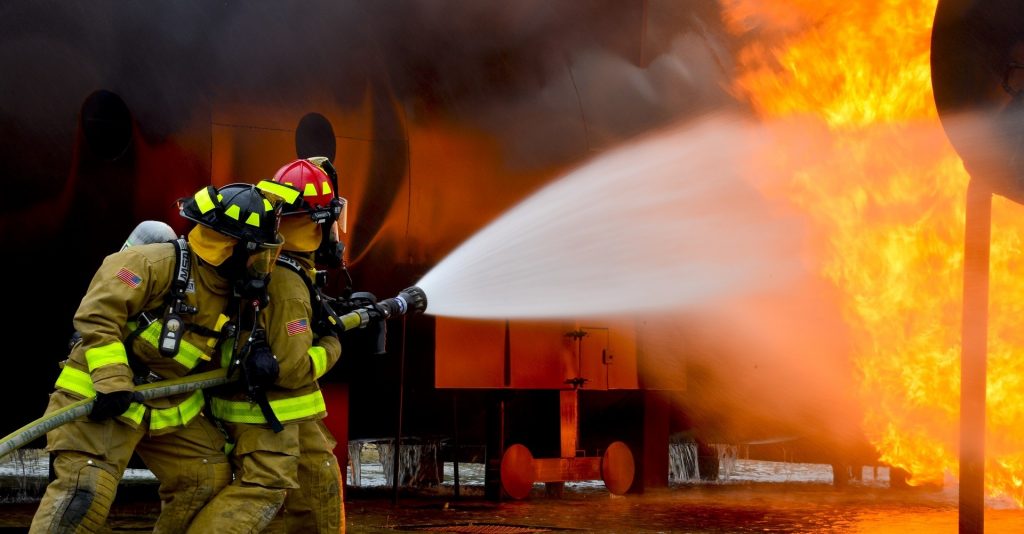
Fire season is officially upon us here in Southern California.  With thoughts of fire season, come thoughts of insurance and whether we have the appropriate coverage to cover our belongings.  Most insurance policies require that you provide an inventory when you file a claim.  Your inventory will need to include proofs of purchase such as receipts and often insurance companies will also ask for pictures of the items that have been lost.

Photographical inventories are regarded as the most exhaustive and reliable form to evidence the condition of the items before the loss.  Insurance agents will often advise that a color photograph is take, in good lighting and labeled.  A good way to ensure that you receive appropriate coverage is to include a purchase price and date with the photo and sometimes even a family member or other person to validate that it is an actual photo taken by you.  Include items in and around your home and take care to include items in vaults, safes and safe deposit boxes. 

It is not enough to make the inventory, but also to have several copies of it (both electronically and in paper), should you need to provide it to insurance agents.

Finally, make sure to keep this inventory list up to date and include new purchases or gifts as you get them. 

While sentimental value can not be replaced by insurance, taking these steps should ensure that you receive meaningful compensation for the physical items you have lost.