
by Lilly Miller | Feb 7, 2020 | CRESTICO
Technological, social, and economic challenges of the future will change the way people live, work, and shop. These changes can significantly impact today’s climate, not just in residential, but in the commercial real estate sector as well and its portion of the value chain. The ultimate question is who will profit and who will lose money in the future world of commercial Real Estate.
What can we expect?
The present evolution of technologies towards digitization and automation will cause massive changes within the industry. The job profiles that exist today will change, along with the clients’ demands on how the job is executed. There will be an increase of redundant low-skilled, blue-collar workers while, white-collar jobs will be more driven by data, performed remotely, which will impact the need for office spaces, as well as functional office design and furnishings. These developments promise to reshape the commercial real estate environment.

The future is mobile
With autonomous cars just around the corner, we can expect major changes to the ways cities are built and developed. Property managers will have to evaluate how they use space. The decreased need for parking spaces both on and off the street will free up large areas for development. In some cities, landlords are converting parking space into commercial real estate, taking advantage of the premium location and street-level access. The new space requirements will include re-configured parking solutions for driverless cars and warehouses for automated loading machines.
Tenant health and wellness
As global environmental concerns are gaining momentum, people are more concerned about the impact of commercial spaces on their health and wellness. A global 2016 survey by Deloitte that targeted the Millennial population showed that young professionals consider employee well-being as one of the most important qualities of a workplace. To meet these demands, companies are considering how to improve the health and well-being of their commercial tenants and residents. The overall prediction is that commercial properties that don’t meet the needs of modern tenants won’t see modern tenants. The survey analysis recommends that real estate companies should include tenants in decision-making, so they can better understand design elements that cater to health and wellness.
Rise of smart energy products
With the UN predictions that the world population will reach 9.7 billion in 2050, over 66% will live and work in cities. As a consequence, commercial places will have to become increasingly urbanized with unprecedented integration of smart technologies, drones, autonomous vehicles, and automated services. The modern urban architecture will rely heavily on smart energy products like industrial lighting solutions shown here, as well as on data and technology to make life more comfortable. As a result, the cost of both commercial and residential real estate is expected to rise in those districts.
3D printing
We won’t have to wait long before builders are able to print entire floors with immense time savings. In China and Dubai, there are already low-rise commercial properties being developed with 3D printing, and the builders are reporting construction time reduced by 70% and cost by 80%. With its huge implications for construction, 3D printing is both a threat to traditional warehousing, as less space will be required, but also an opportunity for retailers to respond on-demand.
Event-driven shopping
The rapid increase of online shopping will further reduce demand for retail real estate assets, with more demand for just-in-time logistics. Amazon is already experimenting with drone delivery service, claiming it’s much safer and faster than going through couriers or postal service. This way, logistics centers could be located at the periphery, freeing more space in the city center. Upper-end high street miles will still exist, primarily through the leisure PR function, but smaller retail businesses in decentralized regions will suffer the heaviest blow. To meet the demands of new customers and build interest, shopping malls will need to resort to more event-driven concepts that emphasize on experience rather than shopping.

Fading relevance of real estate brokers
As individual market players in the real estate arena, real estate brokers will become increasingly redundant due to market transparency policies and automated rental negotiations between owners and lessees. Real estate transactions will be based on technologies like blockchain, which eliminates the need for the middle-man. On the other hand, the government won’t miss an opportunity to benefit from new developments through new tax models, such as a tax for automation. Part of this income will be much needed for mitigating social problems due to increased unemployment, which is a result of automated processes. Although the future banks will certainly take advantage of the high degree of debt financing for real estate projects, crowdfunding platforms will take their share as strong competitors to traditional banking.
The word ‘smart’ has changed slightly in meaning over the last decade, as new technologies granted us even more features that help us manage our lives. The increasing automation of running the business will bring profound changes in the commercial real estate sector, that go far beyond smart buildings and shared workspaces.

by Lilly Miller | Jan 16, 2020 | CRESTICO
Real Estate seems to be one of those investment classes that is always viable to investors, simply due to the versatility of the asset and the numerous ways you can build a positive ROI. Whether you are selling or leasing, or if you’re buying during an economic shift for an affordable price with the intention to wait until the property prices rise again, there are numerous ways you can capitalize on your real estate investment. For example, in 2019 in the US alone, median home prices went all the way up to $316,000, making it one of the best years for real estate agents and experienced investors.
Now that 2020 is well under way, it’s time to prepare for the new emerging trends and adjust your strategy for the new year, whether you are a buyer or a seller. Let’s take a look at some of the top trends you need to get ready for and act on sooner rather than later.
Home prices continue to rise
The growth trend for home prices in the US that has been persevering through 2018 and 2019 seems to the waning, and experts even predict that, while it will continue to rise, the average home price in 2020 will grow by only 2.8%. This means that investors and homebuyers, in general, will be able to take their time selecting the best properties for their needs, without fear of losing out on a good deal and having to overinvest. If you are a seller, you can expect fewer homebuyers to come your way simply because the elevated prices are squeezing them out of the market, however, that also means that affluent buyers will stay in the game.
On the other side, if you are a buyer, you will have to tend to some meticulous financial planning, forecasting, and property research. It’s important that you figure out the monthly mortgage payment according to your budget, and then make sure you stay within that amount. Search for properties that are low on the price list that you can fix up over time and as you build up your financial capabilities.

Accommodating seniors and Gen Z-ers
While the majority of homebuyers are still millennials, it’s important to note that other demographics are jumping into the fray and that real estate professionals need to optimize their offers and portfolios for other types of customers. Namely, 2020 will see a rise in senior buyers as well as Gen Z buyers. With millions of people entering their silver years and millions of young people entering their home-buying years, it’s important to adapt and stage every home according to the unique needs of these generations.
This is the only way to appeal to the modern buyer irrespective of age, as both generations will have very different lifestyle preferences and requirements. When you’re showing a home, you have to appeal to their current and future needs, which means thinking strategically about what seniors need vs what young people might be looking for. Remember to emphasize indoor safety for the senior buyers, and high-tech features for the tech-savvy Gen Z-ers.
The rise of display homes
Now that buyers are taking a more careful and calculated approach to property acquisition, it’s important to note that their decision-making process is evolving as a result. Whether they are looking to buy into a property development project that in its early stages, or if they are looking into plots of land to build their own homes, people are becoming very particular about the architects and builders they work with. In countries where property prices are sky-high, such as Australia, this has already become a major trend.
This is also why the popularity of luxury display homes in Sydney has skyrocketed in recent years, and why it will continue to rise in 2020, as Australian buyers want and need to examine the builder’s capabilities in real life rather than looking at online portfolios, pictures, and case studies. Display homes will become more popular in all high-priced regions of the world, so be sure to prepare for this trend whether you are an investor, an architect, or a buyer.
The neighborhood is not a deciding factor
Surprisingly, the neighborhood where the property resides doesn’t seem to be a deciding factor anymore. Yes, buyers will still research the neighborhood thoroughly, but they will be more inclined to give less-than-ideal neighborhoods a pass if the property is more affordable, or if there are other valuable features that the home can provide. For sellers, this is an opportunity to sell a home in a less popular neighborhood, and for buyers who are working with a limited budget, this is an opportunity to find a new home without breaking the bank.

Technology will fuel market research
Finally, all investors and real estate experts need to invest in technology in order to capitalize on industry trends and market insights this year, and in the years to come. With more and more valuable data flowing around the digital realm, it becomes impossible to conduct predictive analytics manually anymore, which is why you need to integrate AI-driven data analysis into your operation to organize all of that data into actionable reports and create accurate forecasts that will drive your business strategy forward.
Wrapping up
In 2020, many trends that have been persisting in the past will stay relevant, but some will bring significant change to the industry that all parties should be aware of. With these insights in mind, go ahead and optimize your processes for the new year and pave the road to success.
by Lilly Miller | Dec 26, 2019 | CRESTICO
As the year 2019 is closing to an end, some people are reminiscing what they have done this year, while others are turning towards the future. If your plan for 2020 is to sell your house and move to another neighborhood or city, you are probably currently deep in thought about how to make get the maximum from your house in terms of the price.
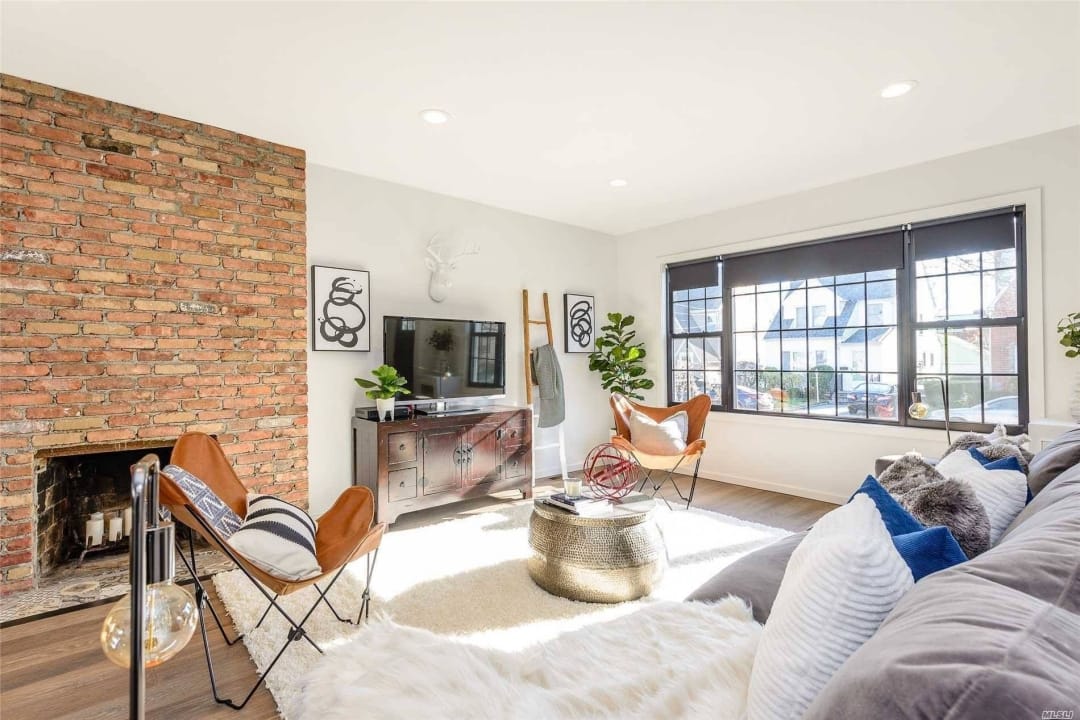
The answer to that question lies in staging, that is, preparing the house in a certain matter to be more pleasing to the potential buyers. The trick is, naturally, not to renovate but to make smaller but effective changes so that their expense is more than covered by the price that you set. So, here are the hottest trends that will attract buyers but without draining your budget.
Two-shade curb appeal
The potential buyers’ first glimpse will be to the exterior of your home, so you would need to work a bit on the curb appeal. One thing that doesn’t change with years is that first impressions matter and an unattractive exterior can lower the general opinion buyers form about the property.
What would fit into the 2020 trends is a two-shade exterior: choose a color that you like, that is, two of its shades (we recommend one to be night watch green) and that would take the estheticism to the next level. As for the walkway pavers, emphasize the color with a stone sealer and when the spring comes, plant flowers of vibrant colors to attract the buyers in swarms.

Add a breath of luxury
An ostentatious interior is not only unappealing to most buyers but it also makes them start pondering over the money they will need to keep it in that state. However, luxurious elements don’t have to be pretentious or expensive because they don’t necessarily include a grand piano in the living room or a spa in the bathroom.
A few subtle elements are enough and placing them at places that are not that obvious would give the house an additional charm. For instance, you can choose affordable plaster ceiling panels for your living room ceiling and be sure that the exquisite ornaments would be the selling feature of the house. They come in different patterns so it will not be difficult to find the one that will fit perfectly into your living room.
Illuminate the space
Most people dislike dark houses and dull brown walls will be enough for them to run away any year, not just in 2020. So, what you want to do is to open the curtains and the windows (if the weather allows you) to let the light into the house. Everything would get an elegant golden hue, while the floral ornaments on the ceiling would seem as if they are in full bloom.
If the buyers can only come after the sunset, don’t worry, the light is still your best friend so you can purchase a few modern lamps that stand on the floor and place others on the table and that would give the house a romantic tone, perfect for couples looking for a place to settle.

Accessorize with unique items
What your house needs to have in 2020 is some statement items: those unique pieces of furniture or decorative elements that dominate the room. It can be an old rocking chair you got on the flea market and repainted or a vintage coffee table that belonged to your grandparents. Old items have the charm your house needs, and the best thing is that you can transform them into something new. Getting that one item doesn’t have to be expensive and it can boost the attractiveness of your house severely.
With 2020 waving at us just around the corner, it is already time to start considering the tactics for staging your house if you wish to sell it swiftly. Luckily, these trends are neither high-priced nor will they take too much time to be put into effect, so with some good marketing, you will sell your house in no time.